








Home > Posts > MARRY IN CHINA OR IN PHILIPPINES

MARRY IN CHINA OR
IN PHILIPPINES

There’s no single “best” choice — it depends on where you plan to live, your timeline, and your priorities.

Here’s a clear, practical comparison to help you decide:

An international marriage newlywed couple, one is a Chinese citizen, may be a Chinese marriage or a Philippine marriage.

Table of Contents

number-1

QUICK DECISION GUIDE

a man whose undecided on his decision staring at the ring which symbolize marriage

     A.)IF YOUR PRIORITY IS :

  • Fastest legal marriage– In China, it’s same-day registration (if docs are ready), while in the Philippines, it has a minimum 10-day waiting period.
  • English-friendly process: In China, all documents need a Chinese translation, while in the Philippines, English is widely used in legal docs.
  • Two foreigners marrying: In China, it’s generally not permitted, while in the Philippines, it’s fully permitted.
  • Plan to live in China: In China, it’s a direct path to obtaining a residence permit, while in the Philippines, you need to apply for Q1 or Q2 before you obtain your residence permit.
  • Plan to live in the Philippines: In China, you don’t need to apply for a 13A visa after marriage, while in the Philippines, it’s a direct path to a 13A spouse visa.
  • Flexibility in ceremony location: In China, there is no need to register at one’s hukou location. According to the newly revised Marriage Registration Regulations, which will officially take effect on May 10, 2025, marriage registration for mainland Chinese residents has been fully realized nationwide. While in the Philippines, the license is valid nationwide; marry anywhere.
  • Minimal document prep: In China, it is required to have an Apostille + Chinese translation, while in the Philippines, you need an apostille only, no translation needed unless the documents are in Chinese.

     B.)LEGAL REQUIREMENTS:

       1.)Minimum age:

    • Groom
      • CHINA: 22 years old and above
      • PHILIPPINES:18 years old and above
    • Birde
      • CHINA: 20 years old and above
      • PHILIPPINES:18 years old and above

       2.)Both parties present?

    • Yes, both countries need both of them to be present in person.

       3.)Foreigner’s key document:

    • CHINESE: Certificate of Legal Capacity (notarized at the Chinese Consulate in the Philippines).
    • FILIPINO: Certificate of Legal Capacity (issued by the Philippine Consulate in China)

       4.)Document authentication:

    • CHINA: Apostille + certified Chinese translation.
    • PHILIPPINES: Apostille only (English accepted)

       5.)Waiting period:

    • CHINA: None (same-day if complete)
    • PHILIPPINES:10-day mandatory public posting

       6.)License validity:

    • CHINA: N/A (immediate registration)
    • PHILIPPINES:120 days nationwide. 
number-2

MARRYING IN CHINA:
PROS AND CONS

a happy couple who just got married in china ,holding their certificate of marriage together

     A.)PROS:

  • Fastest legal registration (same day if documents are ready)
  • Marriage registration and processing fees are free. (It’s recommended to bring your own marriage certificate photos; if you don’t have any, the Civil Affairs Bureau can take photos on-site, but a fee of around 30-50 yuan will be charged.)
  • Direct path to a Chinese family visa if living in China
  • New 2026 rules allow registration anywhere in China (no hukou restriction for some cases)

     B.)CONS:

  • All foreign documents need a certified Chinese translation and translation company qualification documents (adds cost/time)
  • Language barrier: most forms/processes in Chinese only
  • Two foreigners generally cannot marry in China unless one has permanent residence, or one of them is a Chinese citizen.

     C.)CHOOSE CHINA IF:

  • You plan to live in China for a long time after marriage
  • You already have residence status or strong ties to China
  • You want the fastest possible legal marriage
  • You’re comfortable managing Chinese-language bureaucracy or have help.
number-3

MARRYING IN PHILIPPINES:
PROS AND CONS

a happy couple who just got married ,kissing each other passionately with their witnesses

     A.)PROS:

  • English-friendly process; easier communication
  • No translation needed for apostilled documents
  • Nationwide license validity; marry anywhere in PH
  • Clear, established path to 13A spouse visa for Chinese partner
  • More flexible for two foreigners marrying

      B.)CONS:

  • Minimum 10-day waiting period for license
  • Must visit the Chinese Embassy in Manila for Legal Capacity notarization
  • Slightly higher base costs due to embassy fees
  • Longer total timeline (3-8 weeks vs. 2-6 weeks)

     C.)CHOOSE THE PHILIPPINES IF:

  • You plan to live in the Philippines after marriage
  • You prefer an English-language process
  • You want more flexibility in the ceremony location and timing
  • You value the straightforward path to the 13A spouse visa
  • You’re marrying another foreigner (not just a Filipino)

"DIFFERENT COUNTRIES , SAME FOREVER "


     PRO TIP FOR CROSS-BORDER COUPLES:

        Many couples do this hybrid approach:

  • Legally marry in the Philippines (easier process, English-friendly)
  • Register the marriage with the Chinese Embassy in Manila (makes it valid in China)

        Apply for the appropriate visa based on where you’ll live:

  • Moving to China? → Apply for the Q1 family visa at the Chinese embassy
  • Moving to the Philippines? → Apply for a 13A spouse visa at the Bureau of Immigration

     This gives you legal recognition in both countries with minimal hassle.

You may also like

A Filipino woman prepares to sign the LCCM she received before having a China marriage.

OBTAINING LEGAL CAPACITY TO CONTRACT MARRIAGE IN CHINA

A Certificate of Legal Capacity to Contract Marriage (LCCM) is an official document issued by

Philippine diplomatic missions certifying that a Filipino citizen has no legal impediment to marry under Philippine law.

This document is required by Chinese civil authorities before a Filipino can legally marry in China.

Read More »
a purple backgraound with a word saying "visa extensions " at the center with a passport and an airplane logo on it .

CHINESE VISA EXTENSIONS GUIDE

Based on official guidance from China’s National Immigration Administration (NIA)

and local immigration authorities, here is how to extend your Chinese visa duration of stay:

Read More »
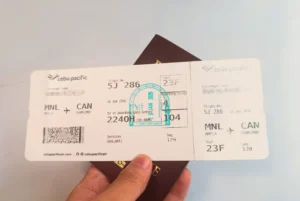
A person holding a boarding pass for international travel can show it to immigration officials.

INTERNATIONAL BOARDING PASS​

A boarding pass is more than just an “admission ticket”;

In international travel, it’s your legal proof of passage through immigration, customs, and security.

For first-time international travelers, the abbreviations and codes on the boarding pass can seem like gibberish.

This article will break it down line by line, supplementing your understanding of hidden information and common misconceptions about international travel.

Read More »
A woman stood in front of the immigration office in the airport, holding a travel guide, preparing for China travel.

AIRPORT GUIDE AND TIPS

Airports are undergoing a digital transformation, with self-service check-in and e-passport gates becoming increasingly common. However, in the Philippines, human assistance remains crucial, especially in the event of technical malfunctions or complex situations. Stay flexible and allow for buffer time to ensure your documents are readily available. A little preparation can bring you composure and confidence throughout the journey.

Read More »
A Chinese visa applicant's materials were marked with "rejected" in red, and he wanted to know the visa rejected reasons.

VISA GOT REJECTED BUT COMPLETE DOCUMENTS

We understand how frustrating it can be to receive a visa rejection when you believe your documents are complete.

Unfortunately, having all the required documents doesn’t guarantee approval 

Visa officers assess much more than just paperwork completeness.

Read More »
china's exit and entry administration bureau that handles residence permits for foreign nationals

D VISA (PERMANENT RESIDENCE VISA)

The D Visa is China’s official Permanent Residence Entry Visa. It is NOT a tourist, work, or student visa.

It is the special entry document that allows foreign nationals who have already been approved for China’s “Green Card.”

(Foreign Permanent Resident ID Card) to enter China and begin their permanent residence journey

Read More »
A beautiful view of the Great Wall of China, hints at relevant recommendations in China travel guides.

BEST PLACES TO VISIT IN CHINA

China has so many places you can consider, whether it’s historical or cultural. No matter what aspects you prefer, you will always find your ideal attraction here.

Read More »
Scroll to Top

To reset your password, please enter your email address or username below.

Announcement

          The online visa application management system on the account terminal is currently undergoing updates. Business is temporarily being conducted offline. We will reopen the online application system once the system is updated and complete.

          We sincerely apologize for any inconvenience caused.

Published: March 29, 2026