




Home > Posts > COMPLETE GUIDE TO ENTER CHINA AND CLEAR CUSTOMS

COMPLETE GUIDE TO ENTER CHINA
AND CLEAR CUSTOMS

Breaking the myths and fears surrounding the “Immigration Bureau.”

The word “Immigration” often instills fear in travelers. Many worry about being stopped, denied entry, or even deported.

This anxiety is particularly common when traveling to China, which has one of the world’s strictest and most efficient border control systems.

However, fear stems from the unknown.

The Philippine Customs and Immigration Bureau is conducting interviews ahead of them, suggesting guidance.

Table of Contents

number-1

Who is the Officer?

In China or the Philippines, the “Immigration Officer” you encounter at airports or ports of entry is usually referred to as an immigration management police officer. They wear uniforms and rank insignia and represent the country in exercising sovereignty.

1.  Core Responsibilities

  • Document Verification: Verify the authenticity and validity of your passport and visa, and confirm that those documents belong to you.
  • Admissibility Assessment: This assesses whether your purpose of entry into China (tourism, business, work, family visit) matches your visa type and whether there is a risk of illegal overstaying or illegal employment.
  • National Security Defense: This involves intercepting terrorists, transnational criminals, deportees, and individuals who may endanger national security.
  • Combating Illegal Employment: This is a key area of ​​focus for border control. If you hold a tourist visa (L-type) but demonstrate a clear intention to work (e.g., carrying a large amount of professional tools, being unable to explain the source of funds, or being completely unaware of your itinerary), you are highly likely to be refused entry.

2. Special Concerns

          Border control will conduct more stringent secondary inspections on the following categories:

  • Frequent travelers: Those who enter the country multiple times in a short period, with stays approaching the visa limit.
  • Sensitive visa types: Holders of business (M) or family visit (Q/S) visas who cannot provide corresponding invitation letters or proof of relationship.
  • Sponsored by non-immediate family members: If sponsored by a “boyfriend/fiancé” rather than an immediate family member, officials may question the authenticity of the relationship in detail to prevent illegal stay under the guise of family visits or involvement in prostitution/work activities.
  • From specific high-risk areas: Depending on the international situation and counter-terrorism needs, citizens of certain countries may be subject to more detailed questioning.
number-2

The Inspection Process

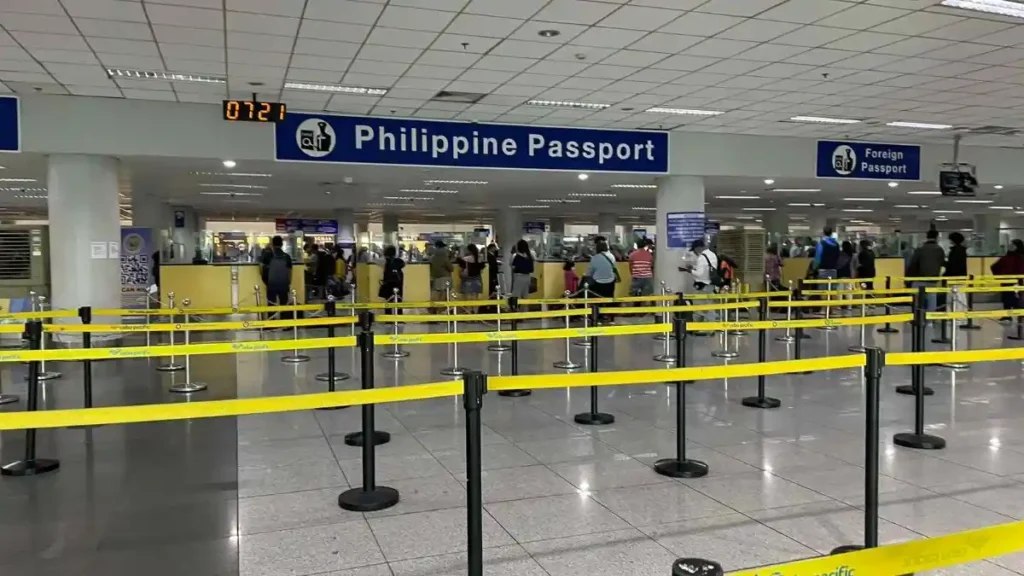
          When you enter Manila Airport, follow the international flight route to the Philippine Bureau of Immigration inspection area. Alternatively, after disembarking from your plane in China, follow the “Arrivals” signs to reach the Border Control area. Both locations will conduct immigration checks, but the process is largely the same, consisting of three key stages:

Phase 1: Preparation and Queuing (Pre-Inspection)
          Before arriving at the counter, please prepare the following essential documents (make sure to keep them in your carry-on bag; do not put them in your checked-in baggage):

  1. Valid Passport: Valid for at least 6 months with blank pages.
  2. Valid Visa: Sticker visa or permanent residence permit. Note: If eligible for visa-free entry (e.g., 144-hour transit visa-free, unilateral visa-free countries), please prepare return flight tickets and hotel bookings for verification.
  3. Arrival Card Receipt: Since November 2025, China has implemented electronic arrival cards. Please save the declaration QR code on your mobile phone in advance (screenshot is sufficient), or print a paper copy. (Required upon entry into China)
    Return/Connecting Flight Tickets: Proof that you plan to leave China.
  4. Proof of Accommodation: Hotel reservation (including address and phone number) or the address information of the inviter.
  5. Supporting Documents (depending on the situation): Copy of invitation letter, conference itinerary, proof of kinship, proof of funds, etc.

Phase 2: Primary Inspection

          This is the most common procedure, with over 90% of travellers completing customs clearance at this stage.

  1. Submit Documents: Hand your passport and arrival card QR code (or paper card) to the officer.
  2. Biometrics:
  •  Photo: Face the camera, remove your glasses, hat, and mask, and look directly at the lens.
  •  Fingerprint Collection: Follow the prompts to provide your fingerprints (usually four fingers of both hands or your thumbs). Note: China needs to collect fingerprint information from all foreigners aged 14-70 entering the country.

         3. Brief Interview: The officer may ask a few simple questions while stamping your passport (see Common Interview Questions part).

         4. Result:

  •  Pass: The officer stamps your passport with an arrival stamp (indicating the date and permitted stay duration) and returns your passport.
  •  Guidance: Sometimes you may be given a “Temporary Accommodation Registration Notice,” reminding you to register at the local police station within 24 hours of arrival at your accommodation (hotels will handle this registration).

Phase 3: Secondary Inspection

          If you are asked to “follow me” or go to a side room, don’t panic. This doesn’t necessarily mean there’s a problem; it just means further verification is needed.

         1.  Triggering Reasons:

  • System alert (e.g., name similar to a blacklisted individual).
  • The visa type does not match the verbal answer.
  • Unable to provide a clear accommodation address or return ticket.
  • Appears overly nervous or hesitates in answers.
  • Random spot check.

         2. Procedure:

  • You will be questioned in detail by a senior police officer in a private room.
  • You may be checked for phone chat history, emails, wallet cash, etc. (Cooperation is required, but there are legal limits).
  • You may be contacted to verify information with your inviter or the hotel.

         3. Results:

  • Release after clarification: Entry will be granted after a clear explanation.
  • Denial of Entry: If false documents, illegal intent, or failure to meet entry requirements are discovered, the visa will be cancelled, the individual will be arranged for the next available flight for repatriation, and may be placed on a blacklist.
number-3

Common Interview Questions

Frequently Asked Questions

Question Intent Strategy
1. What is the purpose of your visit? Verify the authenticity of the visa purpose Be concise and clear.

For example: "Tourism," "Attend the Canton Fair," or "Visit my mother."

Avoid vague answers such as "Just looking around," "Just having some fun," or answers that don't match your visa type (e.g., if you have a tourist visa, don't say you're "Meeting a friend to talk about work").
2. How long will you stay? Check for the risk of overstaying. Specify the exact number of days.

For example, "10 days" or "2 weeks." Make sure this time is within the permitted stay period of your visa.

Do not say "it depends" or "until you find a job."
3. Where will you stay? Confirmed location is traceable Precise address.

For example: "Hilton Beijing Wangfujing Hotel" or "My friend's house at No. XX, XX Road, Shanghai". It would be best to provide a booking confirmation or the address of the person inviting you.
4. Do you have sufficient funds? Assess economic capacity Answer truthfully.

For example: "I brought $2,000 in cash and credit cards, which is enough to cover all expenses." If someone is sponsoring me, please state: "My friend XX is covering my room and board expenses."
5. Have you visited China before? Credit history assessment Answer honestly.

If you have been here before, you can briefly describe the time and purpose of your last visit; if it is your first time, you can express your anticipation.

          Special Circumstances:

  • If invited by your boyfriend/fiancé: The officer may ask, “How did you meet?” and “What does he do for a living?” Prepare screenshots of your chat history, photos together, or other materials to prove the authenticity of your relationship. Be natural and confident.
  • If it’s a business visit: You may be asked about the “name of the partner company” and the “specific meeting content.” Please memorize the information on the invitation.
number-4

A "Customs Clearance Guide" for First-Timer

1.  Document Management:

  • Within Reach Carry with You: Passport, visa, arrival card QR code, flight itinerary, hotel booking confirmation; must be placed in the outermost layer of your carry-on bag.
  • Backup: Save an electronic copy (PDF or screenshot) of all important documents on your phone and send a copy to your email address in case paper documents are lost.

2. Consistency is King

  • Maintain consistency: Ensure that the information on your visa application form, arrival card, and verbal answers is completely consistent. For example, you cannot list “tourist” on the form but say you are “visiting friends” verbally.
  • If you are actually visiting friends, you should apply for a Q2/S2 visa. Alternatively, you can mention this in the remarks of a tourist visa application, as visiting friends is sometimes allowed under a tourist visa, provided it is clearly explained.

3. Emotional Management and Body Language

  • Stay Calm: Nervousness is normal, but excessive nervousness (such as sweating, shifty eyes, trembling hands) can be misinterpreted as guilt. Take a deep breath, smile, and make direct eye contact with the officer (to show respect).
  • Polite Language: Even if you don’t understand, politely say, “Sorry, could you speak slowly?” or “Please slow down.” Don’t show impatience.
  • Don’t Interrupt: Answer only what is asked. Don’t offer unnecessary information that hasn’t been asked; saying too much can lead to mistakes.

4. Make good use of professional resources.

  • Pre-departure consultation: If this is your first time traveling, or if your situation is complex (e.g., blank passport, single woman, no stable employment), you can consult professional visa service agencies or experienced friends. They can help you with mock interviews and check your document checklist.
  • Official channels: Follow the “National Immigration Administration” WeChat official account to get the most authoritative policy interpretations.

5. Warning Regarding “Agencies.”

  • Some companies claim to guarantee a smooth immigration process, even providing fake invitation letters. Don’t believe them
  • China’s border inspection system is highly interconnected. If fake documents are discovered, you will not only be deported on the spot but also face penalties ranging from 1 to 5 years, or even a permanent ban from entering the country. This will also leave a negative record, affecting future visa applications to other countries.
number-5

Accommodation registration

          Many travelers mistakenly believe that getting their passport stamped is the end of the process, but there’s a crucial next step: temporary accommodation registration.

  • Hotel stay: The hotel reception will automatically register you; you only need to show your passport.
  • Guesthouse/Homestay: You (or your host) must, within 24 hours of arrival (72 hours in rural areas), bring your passport, visa, host’s ID card, and property ownership certificate/lease agreement to the local police station to complete the “Temporary Accommodation Registration Form for Foreigners.” (Registration can usually be completed on the same day if you contact them in advance.)
  • Consequences: Failure to register on time may result in a warning or fine, and could even affect subsequent visa extensions or re-entry.

"Immigration management is not an obstacle, but a gateway to protect the safety of the nation and its travelers."


          Passing through immigration smoothly isn’t about luck, but about thorough preparation and sincere communication.

          When you approach the counter with genuine documents, a clear purpose, and respect for the rules and a yearning for the culture, the uniformed immigration officer no longer sees a “potential problem,” but a welcome guest.

You may also like

A person holding a boarding pass for international travel can show it to immigration officials.

INTERNATIONAL BOARDING PASS​

A boarding pass is more than just an “admission ticket”;

In international travel, it’s your legal proof of passage through immigration, customs, and security.

For first-time international travelers, the abbreviations and codes on the boarding pass can seem like gibberish.

This article will break it down line by line, supplementing your understanding of hidden information and common misconceptions about international travel.
Read More »
An AOS or an AOSG is used for a Chinese visa application given by a sponsor.

AOS AND AOSG ,WHAT FOR ?

Sponsored travel usually needs to provide this one but most people don’t know where to get it .

It is most commonly required by Philippine Immigration Officer (IO) to prevent human trafficking and illegal recruitment

Ensuring that travellers have sufficient funds and a genuine relationship with their sponsor

Read More »
A Chinese visa application paper gets rejected, they need advices

VISA REJECTION: CAUSES, CONSEQUENCES, AND STRATEGIC PREVENTION

Many applicants have their visas refused, not because they are “unqualified,” but because of missing documents, contradictory information, or providing false materials.

This pressure is real, but excessive anxiety (overthinking) often leads applicants to prepare incorrect documents or even perform poorly in the interview due to nervousness.

The core logic of visa officers (VOs) is simple: “presumption of guilt.”

That is, they assume you have an intention to immigrate unless you can provide irrefutable evidence that you will return to your home country on time.

Below are six core reasons for visa refusal and an in-depth analysis:

Read More »
An international marriage newlywed couple, one is a Chinese citizen, may be a Chinese marriage or a Philippine marriage.

MARRY IN CHINA OR IN PHILIPPINES

There’s no single “best” choice — it depends on where you plan to live, your timeline, and your priorities.

Here’s a clear, practical comparison to help you decide:

Read More »
This is the outside of MIT. Its professors and tenured professors can apply for an R visa to enter China.

R VISA (TALENT VISA)

This is currently the most valuable visa type in China, often referred to as the “prelude to the Chinese version of the green card.”

It is specifically designed for foreign talents with top abilities in fields such as science, economics, and education.

Read More »
The Philippine Customs and Immigration Bureau is conducting interviews ahead of them, suggesting guidance.

COMPLETE GUIDE TO ENTER CHINA AND CLEAR CUSTOMS

Breaking the myths and fears surrounding the “Immigration Bureau”

The word “Immigration” often instills fear in travelers. Many worry about being stopped, denied entry, or even deported.

This anxiety is particularly common when traveling to China, which has one of the world’s strictest and most efficient border control systems.

However, fear stems from the unknown.

Read More »
A Chinese visa applicant's materials were marked with "rejected" in red, and he wanted to know the visa rejected reasons.

VISA GOT REJECTED BUT COMPLETE DOCUMENTS

We understand how frustrating it can be to receive a visa rejection when you believe your documents are complete.

Unfortunately, having all the required documents doesn’t guarantee approval 

Visa officers assess much more than just paperwork completeness.

Read More »
Scroll to Top

To reset your password, please enter your email address or username below.

Announcement

          The online visa application management system on the account terminal is currently undergoing updates. Business is temporarily being conducted offline. We will reopen the online application system once the system is updated and complete.

          We sincerely apologize for any inconvenience caused.

Published: March 29, 2026