




Home > Posts > INTERNATIONAL BOARDING PASS​

INTERNATIONAL BOARDING PASS

A boarding pass is more than just an “admission ticket”;

In international travel, it’s your legal proof of passage through immigration, customs, and security.

For first-time international travelers, the abbreviations and codes on the boarding pass can seem like gibberish.

This article will break it down line by line, supplementing your understanding of hidden information and common misconceptions about international travel.


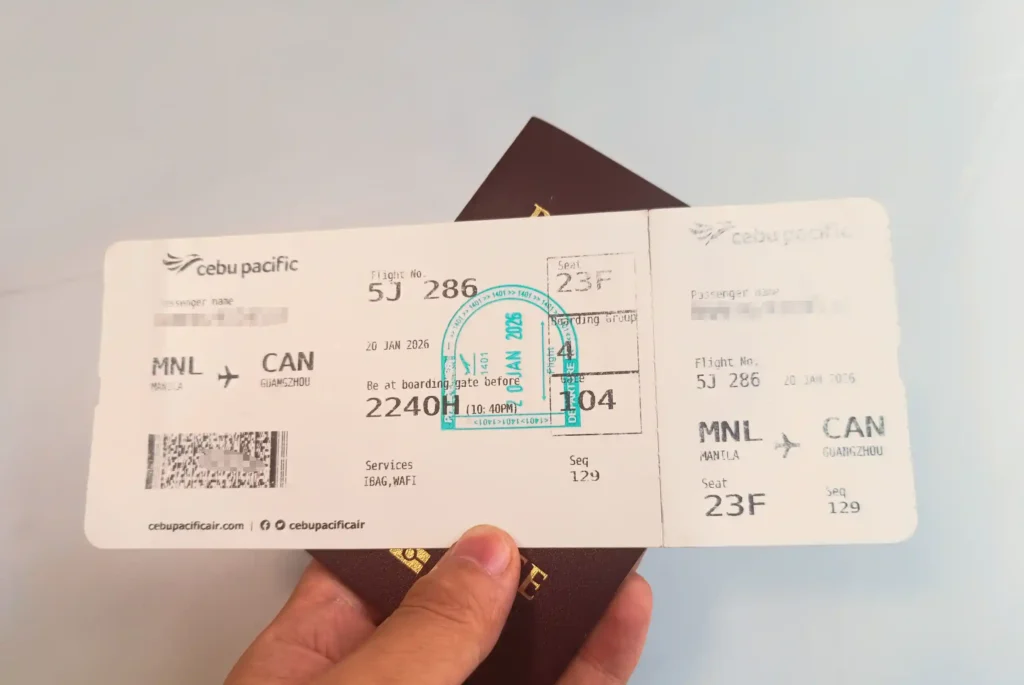
A person holding a boarding pass for international travel can show it to immigration officials.

Table of Contents

number-1

WHAT'S THE PURPOSE OF IT ?

          In addition to their inherent security clearance and boarding authorization, international flight boarding passes also have the following special functions:

1. Immigration Control:

  • Upon leaving your home country, border officials will scan your boarding pass to confirm that you have indeed left the country (cancellation of your exit record).
  • Upon arriving in your destination country, immigration officers will determine your visa type or visa-free eligibility based on the flight number and departure point on your boarding pass (e.g., to confirm whether you qualify for a “transit visa-free” policy).

2. Baggage Tag Link:

  • Your boarding pass usually has a baggage claim number printed in the lower right corner. This is the only way to locate your baggage in a global system if it is lost.

3. Special Service Request (SSR):

  • If you have booked a special meal (such as a vegetarian or halal meal) or require a wheelchair, your boarding pass will usually have a code (such as VGML, WCHR) to remind the crew to provide you with assistance.
number-2

COMMON FORMATS

1. MOBILE BOARDING PASS 

          The most common modern format. It appears in an airline’s app, a wallet app (Apple Wallet, Google Pay), or via email/SMS as a QR code or bar code. You simply hold your phone screen up to the scanner.

  • International Pitfall: Not all countries or airports fully support electronic boarding passes.
  • Situation: Some countries (such as some South American, African, or Asian countries) require stamped paper boarding passes at departure border control or arrival gates at the destination.
  • Recommendation: Even if you have an electronic copy, it’s best to print a paper copy at the transfer counter during international layovers, in case your phone runs out of battery or your system is incompatible.

2. PAPER BOARDING PASS (SELF SERVICE )

          Print at the airport kiosk after you check in yourself.

  • For international flights: If your itinerary involves codeshare flights (e.g., you buy a United Airlines ticket but actually fly Lufthansa) or requires connecting flights, the paper ticket printed at the counter is the safest option, as it shows complete information for all flight segments.

3. PAPER BOARDING PASS (COUNTER ) 

          Printed by an airline agent at the check-in desk, often required for international flights, passengers with special needs, or those who have checked-in bags.

4. PRINT AT HOME

          Less common now, but some airlines still allow you to print a PDF version on your own printer before arriving at the airport.

number-3

KEY INFORMATION DECODED

          This is the most crucial part. The codes on international flight boarding passes are much more complex than those for domestic flights.

1. Passenger Name

  • Format: Surname/Givenname MR (Last Name/First Name Title)
  • International Note:
    1. Middle Name: If your passport has a middle name but it’s not on your boarding pass, it’s usually fine; however, if your boarding pass has a name not on your passport, it might cause problems.
    2. FFP Number: Below your name is often a small string of text like (UA12345678). This is your frequent flyer account number. Make sure it’s printed there; otherwise, your miles may not be credited after the flight.

2. Flight Number

  • Format: CA981 or LH730
  • Expert Interpretation – Code Share:
    1. You might see two lines of flight numbers! For example:

Flight: UA8888 (Your ticket)

Operated by: LH4444 (The actual aircraft operating the flight)

2. Key Point: When you arrive at the airport, make sure to check in at the counter of the airline listed as “Operated by”! If you go to the Lufthansa counter with a United Airlines ticket (and there is no codeshare agreement), or vice versa, you might queue in the wrong line. Also, go to the gate of the airline actually operating the flight.

3. Departure & Arrival Airports (Airport Codes)

  • Format: JFK -> LHR
  • On your boarding pass, the departure and arrival airports are identified by unique three-letter codes assigned by the International Air Transport Association (IATA). These codes are used globally to ensure clarity and understanding, regardless of language barriers.
  • International Pitfall – Multiple Airports in the Same City:
    1. Many large cities have multiple airports with completely different codes! For example, London: LHR (Heathrow), LGW (Gatwick), STN (Stansted). If you buy a ticket for the wrong airport (e.g., departing from LHR but arriving at LGW), the distance could be as far as 60 kilometers!
    2. Always check the code, don’t just look at the city name!

4. Date Of Travel

  • Format: 25 MAR or 12/25
  • While it seems simple, there are some important nuances regarding time zones, international flights, and format, which travelers should be aware of to avoid missing their flights.
  • Important Note for Airport Pickup: When telling your friend to pick you up, state the arrival date, not the departure date on your boarding pass!

5. Boarding Time vs. Departure Time

  • Boarding Time: 14:15 (Queuing begins)
  • Departure Time: 14:45 (Doors close, aircraft pushes back)
    1. International Rule: Gate closing time for international flights is very strict, usually 20-30 minutes before departure.
    2. If you arrive at the gate at 14:20 (even if it’s not yet departure time), ground staff may have already closed the system and refused you boarding.
  • Recommendation: Arrive at the gate before the boarding time.

6. Gate Number

  • Format: A12 or Satellite T3-B4
  • International Complexity:
    1. At large international airports (such as Frankfurt FRA, Dubai DXB), gates may be located in different satellite terminals, requiring a 15-20 minute journey by SkyTrain or shuttle bus.
    2. If your boarding pass shows Gate: To Be Announced (TBA), you must constantly monitor the screen.
    3. Gate Changes: International flights have a very high probability of gate changes due to aircraft type adjustments or delays of preceding flights. Don’t assume the number on your boarding pass is final!

7. Seat Assignment

  • Format: 34K
  • The seat number on your card indicates your exact seat location on the plane. It consists of a number and a letter, corresponding to a specific row and position within the cabin.
  • Emergency Exit Row: If there is an “Exit Row” sign next to the seat number, it means there is ample legroom, but passengers must be in good health, speak English/the local language, and cannot bring infants.
  • Unassigned: If it shows — or TBA, it means you need to go to the gate to find staff to assign a seat on-site (usually happens due to overbooking or aircraft change).

8. Boarding Group / Zone (Boarding Group)

  • Format: Group 3, Zone C, Priority
  • International Differences:
    1. Some airlines (such as European low-cost carriers) board on a paid order basis. Those who haven’t purchased priority boarding will board last and may not have room for their luggage.
    2. Star Alliance / SkyTeam Priority: If you are a Gold member, your boarding pass will be printed with *G or PRIORITY, allowing you to use the priority lane.\

9. Barcode / QR Code

  • The barcode (usually in PDF417 format) or QR code on the boarding pass is a scannable digital identifier that is essential for security checks, VIP lounge access, and boarding.
  • Privacy Warning Upgraded:
    1. Your international boarding pass barcode contains your PNR (Personal Reservation Number).
    2. Risk: Malicious actors can use the PNR code to access airline systems, cancel your flight, tamper with your mileage, or even obtain partial passport information.
    3. Remember: When posting your boarding pass on social media, you shouldn’t include both the barcode and the PNR code (usually a 6-digit alphanumeric combination, such as X7K9M2).
number-4

ADDITIONAL INTERNATIONAL CODES

          These codes are usually printed in the corner of your boarding pass or below your name; they are very important!

  • SSR (Special Service Request):
    1. VGML: Vegetarian Meal
    2. MOML: Halal Meal
    3. BLND: Assistance for the Blind
    4. UMNR: Unaccompanied Minor
  • DOC CHECK (Document Check Status):
    1. OK: Document check passed.
    2. SEE AGENT: Documents have issues or have not been checked; you must go to the counter, otherwise you will not be able to pass through security or board.
  • SEQ NO (Serial Number): Some countries (such as Japan and South Korea) require this number for immigration records.
number-5

HOW TO GET ONE & TROUBLESHOOTING

1.  Screenshot + Wallet Backup:

  • The international roaming signal may be unstable. Be sure to take a screenshot and add it to Apple Wallet/Google Pay.
  • Ultimate Backup: Keep a paper copy in your carry-on bag in case your phone runs out of battery or is damaged.

2. Timatic Check:

  • After receiving your boarding pass, double-check that the name and passport number match your visa exactly. Airlines have the right to refuse a boarding pass if they find any issues with your visa at check-in, even if you already paid for it.

3. Connecting Flights:

  • If you have connecting flights, your boarding pass may show both segments of your journey.
  • Note: Confirm that you have printed out your boarding pass for the second flight. If not, note the location of the transfer desk at the transit airport and print it out as soon as you disembark.

4. Privacy Protection:

  • Again: Never post unblurred international flight boarding passes on social media. This is not only a privacy issue, but it could also lead to targeted scams or identity theft.

5. Pro Tips:

  • The “Final Call” Rule: If you hear an announcement saying “Final Call for Flight XXX to [Destination]”, regardless of your boarding group, immediately drop everything and rush to your gate. This is your last chance; the cabin door will physically close in a few minutes.
  • Name Mismatch: If you find a spelling error on your boarding pass (e.g., SMITH instead of SMIT), don’t try to get past it. International security and border control are very strict. Go to the counter immediately to correct it, even if you have to wait in line. Being found to have a name mismatch at the security checkpoint or gate will result in being denied boarding and difficulty getting a refund.
  • Keep Until Exit: On domestic flights, you can discard your boarding pass after exiting the airport. However, for international travel, keep your boarding pass until you have completely left your destination airport.

Reasons: Sometimes it needs to be scanned again upon exiting the station; if you need a tax refund, your boarding pass is essential; if your luggage is lost, it’s the basis for filing a police report.

"Your boarding pass for international flights is the control center for your entire journey."


          Understanding your boarding pass not only allows you to navigate security checks and boarding with ease, but also helps you quickly find solutions when encountering flight delays, confusing transfers, or document issues.

          Spending just 2 minutes checking this information before departure can prevent 99% of airport nightmares.

You may also like

A visa type in a Chinese visa application has many kinds.

CORRECT VISA THAT APPLIES ON YOUR SITUATION

 There is no single visa that applies to every situation. Visa requirements are highly specific and depend on multiple factors.

The “correct visa” is determined by the intersection of who you are (Nationality ) , where you’re going (Destination Rules ) ,and why you’re going (Purpose Of Travel ).

There is no universal visa – careful research and proper knowledge are essential for compliance and successful entry.

Read More »
A group of people was discussing the differences between self process Chinese visa and the assist process.

VISA SELF PROCESS AND VISA THROUGH ASSIST

In 2026, the gap between self-processing (DIY) and assisted processing (through an agency)

has widened due to new digital vetting systems.

Some travelers have their own preference to choose which one they prefer when they are applying for a visa.

Read More »
This is the outside of MIT. Its professors and tenured professors can apply for an R visa to enter China.

R VISA (TALENT VISA)

This is currently the most valuable visa type in China, often referred to as the “prelude to the Chinese version of the green card.”

It is specifically designed for foreign talents with top abilities in fields such as science, economics, and education.

Read More »
The Philippine Customs and Immigration Bureau is conducting interviews ahead of them, suggesting guidance.

COMPLETE GUIDE TO ENTER CHINA AND CLEAR CUSTOMS

Breaking the myths and fears surrounding the “Immigration Bureau”

The word “Immigration” often instills fear in travelers. Many worry about being stopped, denied entry, or even deported.

This anxiety is particularly common when traveling to China, which has one of the world’s strictest and most efficient border control systems.

However, fear stems from the unknown.

Read More »
A Chinese visa applicant's materials were marked with "rejected" in red, and he wanted to know the visa rejected reasons.

VISA GOT REJECTED BUT COMPLETE DOCUMENTS

We understand how frustrating it can be to receive a visa rejection when you believe your documents are complete.

Unfortunately, having all the required documents doesn’t guarantee approval 

Visa officers assess much more than just paperwork completeness.

Read More »
A no job man sits on the ground, worrying about his Chinese visa application sponsor problem.

UNEMPLOYED AND SPONSORED: APPLYING FOR A VISA

Applying for a visa as an unemployed individual with a sponsor is a common scenario, especially for students

fresh graduates, housewives, or those taking a career break.

Since you are not showing proof of your own income

The embassy will focus more on whether you plan to return home than on your financial status.

Read More »
Scroll to Top

To reset your password, please enter your email address or username below.

Announcement

          The online visa application management system on the account terminal is currently undergoing updates. Business is temporarily being conducted offline. We will reopen the online application system once the system is updated and complete.

          We sincerely apologize for any inconvenience caused.

Published: March 29, 2026