
SOME MISTAKES IN APPLYING FOR A VISA
Most visa refusals aren’t about “not qualifying”—they’re about avoidable errors that make officers doubt your credibility.Fix these, and your approval odds rise dramatically.

From “Bridge of Trust” to “Key to Customs Clearance”
An invitation letter serves as a bridge of trust between a traveler and the immigration authorities of the country they wish to visit .
While not always mandatory for every visa type, it is often the most persuasive document in a visa application.
An invitation letter serves as a “bridge of trust” between travelers and Chinese immigration authorities. In the Chinese visa application system, it is more than just a letter; it is a legally binding third-party endorsement.
1. Verifying the Genuineness of Purpose
The primary task of Chinese consulates and border control officials is to verify whether the applicant’s visit is “genuine.”
2. Financial Guarantee
A common reason for visa refusals is the concern that the applicant lacks sufficient funds and would become a burden on the host country.
3. Verifiable Accommodation
4. Strengthening the “Proof of Return.”
This is a seemingly paradoxical but ingenious logic: a strong invitation letter proves you will leave.
In China, the form and requirements of invitation letters vary significantly depending on the visa type, and cannot be generalized, but they can generally be categorized into two types:
Issuing Party: Must be a legally registered company or government-authorized agency within China.
Key Document: A Letter of Invitation from an Authorized Entity (TE Invitation Letter) is usually required. This is an official document with an anti-counterfeiting code issued by the provincial-level foreign affairs office or commerce department in China. However, for applicants from certain countries, a letter with a standard company seal may not be sufficient; the TE code must be presented.
Emphasis: Emphasis is placed on the authenticity of trade transactions, the name of the exhibition, and the business history between the two parties.
Issuing Party: A Chinese citizen residing in China or a foreigner with permanent residency in China.
Key Documents: A signed invitation letter + a copy of the inviter's identification document.
Emphasis: Emphasize proof of kinship (such as marriage certificate, birth certificate, notarized kinship certificate) and the inviter's legal residency.
The following is a detailed explanation of the essential elements of a standard Chinese visa invitation letter:
| A | The Inviter | NOTE |
| 1 | Full Name | Must be exactly the same as the name on your ID card or business license. |
| 2 | Address in China | accurate to the house number (used to verify residence or office location). |
| 3 | Phone Number | It must be a working Chinese mobile or landline number. The consulate may verify this by phone. |
| 4 | Email Address | Used to receive notifications for missing documents or electronic receipts. |
| 5 | Status & ID Copy |
Individuals: Must provide a photocopy of both sides of their Chinese ID card, or a photocopy of their passport and Chinese permanent residence permit (green card).
Companies: Must provide a photocopy of their business license (stamped with the company seal). |
| 6 | Signature & Seal |
Personal invitations must be signed in person.
Company invitations must bear the company seal (red stamp); a signature alone is usually invalid. |
| B | The Invitee | NOTE |
| 7 | Full Name | Must be exactly the same as the machine-readable area of the passport. |
| 8 | Gender & Date of Birth. | / |
| 9 | Passport Number and validity period. | / |
| 10 | Nationality | / |
| C | Visit Details | NOTE |
| 11 | Purpose of Travel |
Visiting relatives: Specific details such as "visiting parents/spouse" and "family reunion" must be specified.
Business: Specific details such as "contract negotiation," "attending the Canton Fair," and "technical guidance" must be specified. |
| 12 | Arrival & Departure Dates | It must be specific to the day and logically sound. |
| 13 | Places to be Visited | List the cities you plan to visit (e.g., Beijing, Shanghai, Guangzhou). |
| 14 | Accommodation | Clearly state: "The accommodation will be at the inviter's home at [address]" or "The accommodation will be arranged by the inviting company at [hotel name]". |
| 15 | Financial Support | Clearly state: "All expenses (airfare, accommodation, medical care, insurance) shall be borne by the inviter" or "The invitee shall bear the costs themselves, and the inviter shall provide accommodation guarantees." Avoid ambiguity. |
| D | Target Authority | NOTE |
| 16 | To the unit | It is usually written as "To: Visa Section of the Embassy/Consulate General of the People's Republic of China in [Country Name]". |
1. Consequences of Forging Invitation Letters:
2. Hotel Booking vs. Staying with Friends and Relatives:
3. Professional Advice
"An invitation letter is more than just a piece of paper; it is your passport of confidence to enter China."
Confluence-International
The invitation letter demonstrates to Chinese immigration authorities your support network, clear travel plans, and commitment to the law.
In this era of digitalization and the rule of law, authenticity is the only shortcut. Whether through the complex TE process or a simple letter from home, as long as the information is truthful, logically sound, and complete, the invitation letter can successfully build a bridge of trust to China, helping you embark on your journey smoothly.

Most visa refusals aren’t about “not qualifying”—they’re about avoidable errors that make officers doubt your credibility.Fix these, and your approval odds rise dramatically.


For first-time visa applicants, the process can be daunting due to unfamiliarity with consular procedures and the high stakes of the interview.
Below are common topics and specific situations frequently encountered by first-timers, along with strategies to handle them effectively in 2026.

The F visa (visitor visa) is one of the most frequently applied-for visa types for foreign experts, scholars, business travelers, or cultural exchange groups. Although there is now a convenient policy of “no fingerprinting,” the core of the F visa lies in the verification of the “invitation letter.”
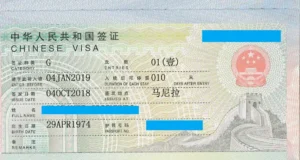
The Chinese G visa, also called the Transit Visa, is a special short-term entry permit designed for international travelers
who need to pass through mainland China as a connecting point on their journey to a different final destination.

Based on immigration experts and visa consultants, here are the most significant challenges you may face when applying for a visa without professional help:
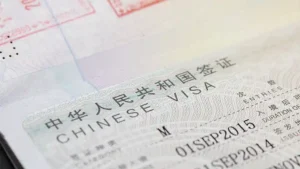
The M Visa (often called the “Business Visa”) is designed for professionals and entrepreneurs.
Those who need to visit mainland China for commercial and trade-related activities.
Essentially, if you are traveling to China to conduct business but won’t be “employed” by a Chinese company or
Receive a local salary; this is likely the visa you need.

China Travel Itinerary: How to Craft a Winning Plan
Regarding the itinerary section that many clients have inquired about, we have emphasized the core pain point of “how to deal with inquiries from the immigration authorities.” For travelers to China, a logically sound and detailed itinerary is the most powerful weapon to prove a “pure tourism purpose” and avoid being offloaded.

Although both represent a country’s interests in another country, they differ fundamentally in their legal status, core functions, jurisdiction, and crisis management authority.
Simply put: embassies are responsible for political dialogue between “states,” while consulates are responsible for specific services between “people.”
The online visa application management system on the account terminal is currently undergoing updates. Business is temporarily being conducted offline. We will reopen the online application system once the system is updated and complete.
We sincerely apologize for any inconvenience caused.
Published: March 29, 2026