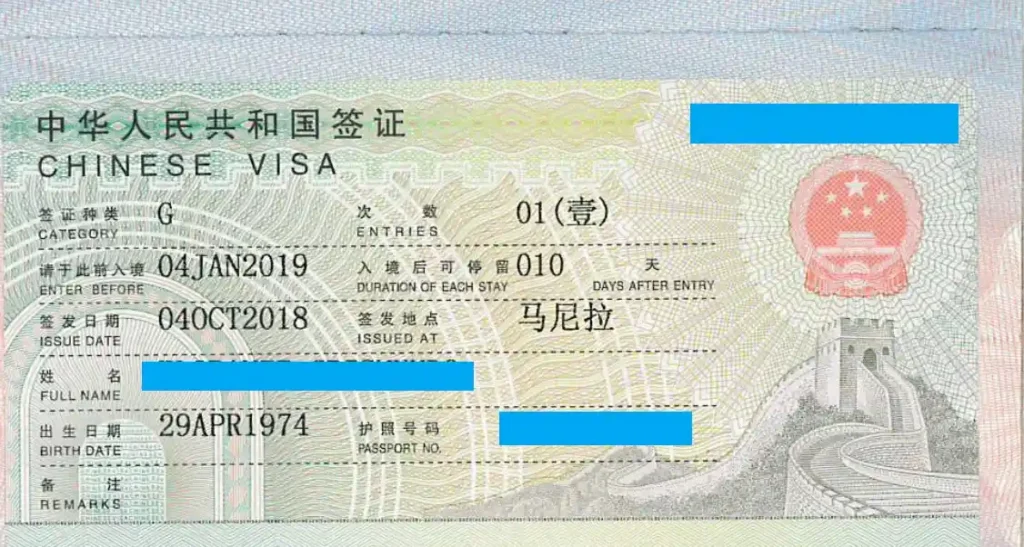
YOU PROBABLY NEED A G VISA IF:
1.)YOUR NATIONALITY IS NOT ON CHINA’S VISA-FREE TRANSIT LIST
- WHAT THIS MEANS
- China allows citizens of 54+ countries (including the US, UK, Canada, Australia, Japan, Singapore, Brazil, and most EU nations) to transit without a visa for up to **240 hours **(10 days) at designated ports.
- If your country is NOT on this list, you generally cannot use visa-free transit—even for short layovers—and will need to apply for a G visa in advance.
2.) YOUR LAYOVER EXCEEDS 24 HOURS, AND YOU DON’T QUALIFY FOR AN EXTENDED VISA-FREE TRANSIT
- WHAT THIS MEANS
China offers two visa-free transit options:- 24-hour visa-free: Available to all nationalities at most ports—but you must leave within 24 hours and usually stay within the airport city.
- 240-hour(10-day): Available only to eligible nationalities at designated ports.
- If your layover is longer than 24 hours AND you’re not from an eligible country, the 24-hour rule won’t cover you—and you’ll need a G visa.
3.)YOU NEED TO LEAVE THE AIRPORT DURING YOUR LAYOVER (e.g., for a Hotel Stay)
- WHAT THIS MEANS
If you want to exit the international transit area—to stay at a hotel, meet friends, tour the city, or catch a domestic connecting flight—you must legally enter mainland China. This requires either:- Qualifying for visa-free transit (and registering with local police if staying overnight), OR
- Holding a valid G visa.
4.)YOUR ROUTE INVOLVES COMPLEX TRANSFERS (e.g., Entering China Twice)
- WHAT THIS MEANS
Standard visa-free transit policies usually require you to:
- Enter China from Country A
- Exit China to Country B (a different third country)
- Travel in one continuous direction (no backtracking)
- If your itinerary loops back through China, visa-free transit often won’t apply—and you’ll need a double-entry G visa.
5.)YOU’RE TRAVELING BY TRAIN OR SHIP THROUGH CHINA TO A THIRD COUNTRY
- WHAT THIS MEANS
Most visa-free transit policies apply primarily to air travel. If you’re entering China by:- International train (e.g., from Vietnam, Laos, Mongolia, Russia, or Kazakhstan)
- Cruise ship or ferry (e.g., docking in Shanghai, Tianjin, or Xiamen en route to Japan/Korea)
- You will almost always need a G visa, even if your nationality is on the visa-free list. Land and sea ports have stricter transit rules.
GOLDEN RULE: The G Visa is ONLY for transiting through China to reach another country. It is NOT a tourist visa, work visa, or residence permit. Breaking these rules can lead to fines, deportation, or future visa bans.
A.) RULE #1: TRANSIT PURPOSE ONLY – NO WORK, STUDY, OR LIVING
1.) WHAT YOU CAN DO:
- Change flights/trains/ships in China on your way to a third country
- Stay in a hotel during your layover (if your visa allows leaving the airport)
- Take short walks, eat meals, or do light sightseeing within your allowed stay period
- Shop at airports or city stores during your transit time.
2.) WHAT YOU CANNOT DO:
- Taking a job (paid or unpaid)– Immediate deportation + 1-10 year ban on future Chinese visas
- Enrolling in classes or courses– Visa cancellation + fines + possible detention.
- Renting an apartment or moving belongings to China– Denied entry at the border + blacklisted in the immigration system.
- Attending business meetings or signing contracts– Visa revoked + the company may face penalties.
- Visiting family for an extended stay-Overstay penalties + difficulty getting future visas.
SIMPLE WAY TO REMEMBER: “Pass Through, Not Settle Down”
If your main goal is to stay in China for any purpose other than changing transportation, you need a different visa type.
B.)RULE #2: ONWARD TICKET REQUIRED – PROOF YOU ‘ RE LEAVING CHINA
1.)WHAT COUNTS AS VALID PROOF:
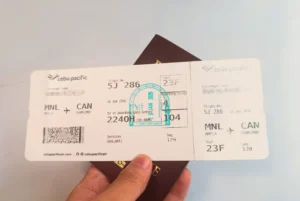
- FLIGHT TICKET
- Confirmed seat (not “on hold”)
- Departure from China to a third country/region (not your origin country)
- Date within your visa’s “Duration of Stay.”
- TRAIN TICKET
- International train booking (e.g., China to Vietnam, Russia, Kazakhstan)
- Confirmed seat and date.
- CRUISE/SHIP TICKET
- Boarding pass or booking confirmation
- Port of departure in China, destination outside China.
2.)WHAT DOES NOT COUNT:
- “Hold” or unconfirmed reservations
- Round-trip tickets returning to your origin country (e.g., USA → China → USA)
- Tickets dated AFTER your visa’s “Duration of Stay” expires
- Fake or altered documents (serious offense!)
3.) PRO TIPS:
- Print 2 copies of your onward ticket – one for immigration, one as backup
- Save a digital copy on your phone + email it to yourself
- Check airline names: Some budget airlines don’t issue traditional e-tickets – get official confirmation from the carrier
- If your itinerary changes: Update your onward ticket BEFORE traveling to China.
C.)RULE #3: NO EXTENSION FOR TOURISM– EXTENSIONS ARE RARE & STRICT
1.) WHEN EXTENSIONS MIGHT BE APPROVED:
- Flight cancellation due to weather/airline issues.
- Official airline notice
- New confirmed onward ticket
- Medical emergency preventing travel
- Hospital certificate + doctor’s note
- Proof of treatment
- Natural disaster or political unrest in the destination country
- Government travel advisory
- News reports + embassy notice
- Genuine transit delay (e.g., missed connection)
- Original + new itinerary
- Explanation letter
2.)WHEN EXTENSIONS WILL LIKELY BE DENIED:
- “I want to see more of China” (tourism)
- “I found a job opportunity” (work)
- “My friend invited me to stay longer” (social visit)
- “I lost track of time” (negligence)
3.) HOW TO APPLY FOR AN EXTENSION (If Truly Necessary):
- Act BEFORE your stay expires – don’t wait until the last day
- Visit the local Exit-Entry Administration Bureau (not the embassy)
- Example: In Shanghai: No. 1500 Minsheng Road, Pudong New Area
- Bring these documents:
- Original passport + G Visa
- Written explanation letter (in Chinese or English)
- Supporting evidence (airline notice, medical records, etc.)
- New onward ticket showing revised departure date
- Completed extension application form (available at the bureau)
- Pay the extension fee (if approved)
- Wait for the decision
SIMPLE RULE: “Plan to leave EARLIER than your max stay”.If your visa allows 10 days, plan to depart on Day 8 or 9. This builds in a buffer for delays.
D.)RULE #4: PORT & GEOGRAPHIC RESTRICTIONS – KNOW WHERE YOU CAN GO
1. Two Types of Restrictions:
- FOR G VISA HOLDERS:
- Generally, you can transit through any international port in mainland China that issued your visa
- But: Your visa may specify entry/exit ports (check the “Remarks” section on your visa sticker)
- You cannot use a G Visa to enter China via a land border unless explicitly authorized.
- FOR VISA-FREE TRANSIT POLICIES (24h/144h/240h):
Many travelers confuse G Visa rules with visa-free transit rules. If you’re using a visa-free transit (not a G Visa), these restrictions apply:- 24-Hour Visa-Free- Cannot leave the airport transit zone
- 144-Hour Visa-Free- Must stay within the approved region; cannot travel to other provinces.
- 240-Hour Visa-Free-Must enter and exit from ports within the same approved region.
2.)HOW TO CHECK YOUR RESTRICTIONS:
- Look at your visa sticker: Does it have remarks like “Entry via PEK only” or “Valid for transit in Shanghai region”?
- Check official sources:
- China National Immigration Administration: https://en.nia.gov.cn/
- Local embassy website
- Call hotline: +86-10-12367
- Ask your airline: They often have updated transit requirement info.
PRO TIP FOR G VISA HOLDERS: “When in doubt, stay near your transit port”.If your G Visa doesn’t specify geographic limits, you technically can travel within China during your stay. BUT: Immigration officers may question you if you’re far from your entry/exit port. Keep hotel bookings and transport tickets handy to prove your transit purpose.
E.)RULE #5: INTERVIEW POSSIBLE – BE PREPARED TO EXPLAIN YOUR PLANS
- WHY INTERVIEWS HAPPEN:
Consular officers may request an in-person interview if:- Your itinerary seems unusual (e.g., long layover, complex route)
- Documents are incomplete or inconsistent
- You’re from a country with a higher immigration risk (per embassy assessment)
- You’ve had previous visa issues with China or other countries
- Random selection (part of standard security checks)
1.)COMMON INTERVIEW QUESTIONS:
- “Why are you transiting through China?”
- Is this truly transit, or are you trying to enter for another purpose?
- “What will you do during your stay?”
- Will you work, study, or overstay?
- “Do you have family/friends in China?”
- Might you try to stay illegally?
- “Why not fly direct?”
- Is your route suspicious?
2.)HOW TO PREPARE FOR A POSSIBLE INTERVIEW:
- Bring backup documents:
- Printed itinerary with flight numbers
- Hotel reservation (if leaving the airport)
- Contact info for your next destination (hotel, friend, business)
- Practice concise answers: Keep responses clear, honest, and under 30 seconds
- Stay calm and polite: Nervousness can be misinterpreted as dishonesty
- Don’t memorize scripts: Authentic answers sound more credible.
3.) WHAT NOT TO DO IN AN INTERVIEW:
- Lie or exaggerate (inconsistencies are easily checked)
- Argue with the officer (respectful cooperation is key)
- Offer unsolicited information (answer only what’s asked)
- Show frustration if asked to repeat questions (they’re verifying details).
SIMPLE MINDSET: “Be clear, be brief, be truthful”. Immigration officers process hundreds of applications. A straightforward, honest answer builds trust faster than a complicated story.