Home > Posts > INVITATION LETTER FOR CHINESE VISA

INVITATION LETTER FOR CHINESE VISA

From “Bridge of Trust” to “Key to Customs Clearance”

An invitation letter serves as a bridge of trust between a traveler and the immigration authorities of the country they wish to visit .

While not always mandatory for every visa type, it is often the most persuasive document in a visa application.

A man is handwriting an invitation letter for a Chinese visa application.

Table of Contents

number-1

Why invitation letter is important?

          An invitation letter serves as a “bridge of trust” between travelers and Chinese immigration authorities. In the Chinese visa application system, it is more than just a letter; it is a legally binding third-party endorsement.

1. Verifying the Genuineness of Purpose

          The primary task of Chinese consulates and border control officials is to verify whether the applicant’s visit is “genuine.”

  • Extending the original logic: For business visas (M), family visit visas (Q/S), or work-related residence permits, verbal statements are often insufficient. An invitation letter issued by a legitimate Chinese entity (company) or a legal resident (citizen/permanent resident) provides “third-party testimony” that is consistent with the application form.
  • In the Chinese context, it proves that you are not wandering aimlessly but that you have a clearly defined receiving organization, a specific meeting agenda, or a genuine family relationship awaiting you.

2. Financial Guarantee

          A common reason for visa refusals is the concern that the applicant lacks sufficient funds and would become a burden on the host country.

  • Extending the original logic: In the Chinese context, the “expense-sharing” clause in an invitation letter (who pays for airfare, accommodation, and living expenses) constitutes an actual moral and even legal contract.
  • In the Chinese context: If the inviting party is a Chinese company, it usually means that the company will bear the expenses during the business trip; if it is an individual invitation, it means that the inviter promises to provide food and accommodation support to the guest if they are short of funds, and to prevent them from working illegally or overstaying their visa.

3. Verifiable Accommodation

  • Extending the original logic: Compared to hotel bookings that may be canceled at any time, the residential address of a Chinese citizen or permanent resident is considered a more stable and easily verifiable point of residence.
  • In the Chinese context, according to the “Exit and Entry Administration Law of the People’s Republic of China,” foreigners must register their accommodation in China. The detailed address provided in the invitation letter is not only the basis for visa approval but also the basis for future registration of temporary residence by the local police station. This gives the authorities a precise physical location so they can find you in an emergency.

4. Strengthening the “Proof of Return.”

          This is a seemingly paradoxical but ingenious logic: a strong invitation letter proves you will leave.

  • Extending the original logic: by clearly listing the “arrival date” and “departure date,” and having the inviter confirm that the reception will only be held during this period, the concept of a “short-term visit” is reinforced to the visa officer, eliminating suspicion of illegal immigration.
  • In the Chinese context, Chinese visas strictly distinguish between “visits” and “residence.” The clearly stated travel period in the invitation letter directly corresponds to the “Duration of Each Stay” noted by the visa officer, serving as the first line of defense against overstaying.
number-2

Invitation letters types

          In China, the form and requirements of invitation letters vary significantly depending on the visa type, and cannot be generalized, but they can generally be categorized into two types:

Business/Trade visas
(M visa / F visa)

Issuing Party: Must be a legally registered company or government-authorized agency within China.

Key Document: A Letter of Invitation from an Authorized Entity (TE Invitation Letter) is usually required. This is an official document with an anti-counterfeiting code issued by the provincial-level foreign affairs office or commerce department in China. However, for applicants from certain countries, a letter with a standard company seal may not be sufficient; the TE code must be presented.

Emphasis: Emphasis is placed on the authenticity of trade transactions, the name of the exhibition, and the business history between the two parties.

Family visit/private affairs category
(Q visa / S visa)

Issuing Party: A Chinese citizen residing in China or a foreigner with permanent residency in China.


Key Documents: A signed invitation letter + a copy of the inviter's identification document.


Emphasis: Emphasize proof of kinship (such as marriage certificate, birth certificate, notarized kinship certificate) and the inviter's legal residency.

number-3

What should a qualified invitation letter include?

          The following is a detailed explanation of the essential elements of a standard Chinese visa invitation letter:

Invitation letter

A The Inviter NOTE
1 Full Name Must be exactly the same as the name on your ID card or business license.
2 Address in China accurate to the house number (used to verify residence or office location).
3 Phone Number It must be a working Chinese mobile or landline number. The consulate may verify this by phone.
4 Email Address Used to receive notifications for missing documents or electronic receipts.
5 Status & ID Copy Individuals: Must provide a photocopy of both sides of their Chinese ID card, or a photocopy of their passport and Chinese permanent residence permit (green card).

Companies: Must provide a photocopy of their business license (stamped with the company seal).
6 Signature & Seal Personal invitations must be signed in person.

Company invitations must bear the company seal (red stamp); a signature alone is usually invalid.
B The Invitee NOTE
7 Full Name Must be exactly the same as the machine-readable area of ​​the passport.
8 Gender & Date of Birth. /
9 Passport Number and validity period. /
10 Nationality /
C Visit Details NOTE
11 Purpose of Travel Visiting relatives: Specific details such as "visiting parents/spouse" and "family reunion" must be specified.

Business: Specific details such as "contract negotiation," "attending the Canton Fair," and "technical guidance" must be specified.
12 Arrival & Departure Dates It must be specific to the day and logically sound.
13 Places to be Visited List the cities you plan to visit (e.g., Beijing, Shanghai, Guangzhou).
14 Accommodation Clearly state: "The accommodation will be at the inviter's home at [address]" or "The accommodation will be arranged by the inviting company at [hotel name]".
15 Financial Support Clearly state: "All expenses (airfare, accommodation, medical care, insurance) shall be borne by the inviter" or "The invitee shall bear the costs themselves, and the inviter shall provide accommodation guarantees." Avoid ambiguity.
D Target Authority NOTE
16 To the unit It is usually written as "To: Visa Section of the Embassy/Consulate General of the People's Republic of China in [Country Name]".
number-4

Authenticity is the bottom line

1.  Consequences of Forging Invitation Letters:

  • Direct Rejection: If the consulate verifies the inviter’s identity by phone and finds that the inviter does not exist, the phone number is invalid, or the inviter denies issuing the invitation, the application will be immediately rejected.
  • Blacklisting: Using false materials (including forged official seals and fictitious TE codes) will result in being entered into the Chinese visa system’s blacklist. This will not only prevent you from applying for a Chinese visa for several years but may also affect your application for visas to other countries (information sharing mechanism).
  • Border Deportation: Even if you manage to obtain a visa, if officials conduct random checks upon entry into China and find discrepancies between the information and the system, you will be refused entry and deported on the same flight, and may even face administrative detention.

2. Hotel Booking vs. Staying with Friends and Relatives:

  • First-time visitors to China: If it’s a purely tourist trip (L visa) and you have no friends or relatives, booking a reputable hotel and providing full hotel reservation confirmations is perfectly acceptable, even more convenient, as you don’t need to ask your friend for an invitation letter.
  • Situations where an invitation letter is required: If you plan to stay with friends or relatives, an invitation letter is mandatory. In this case, simply providing a hotel reservation confirmation might raise suspicion (why did you book a hotel if you’re staying at your relative’s house or friend’s house ?). The invitation letter is required in this situation and must be accompanied by a copy of the inviter’s ID.

3. Professional Advice

  • Do Not Forge Documents: If you are unfamiliar with the format of Chinese official documents, the specifications of official seals, or the application process for a TE invitation letter, please seek professional assistance.
  1. Business Travelers: Have your Chinese partner apply directly to the local Foreign Affairs Office for a formal TE invitation letter.
  2. Family Visits Travelers: Have your Chinese relative write or print and sign the invitation letter according to the template provided on the consulate’s website, and attach a clear scanned copy of their identification document.
  • Information Consistency: Every letter and every number on the invitation letter must correspond word-for-word to the information on the visa application form (COVA). Any minor discrepancy (such as a one-day difference in dates or an extra space in the spelling of a name) may result in a request for additional documents or visa refusal.

"An invitation letter is more than just a piece of paper; it is your passport of confidence to enter China."


          The invitation letter demonstrates to Chinese immigration authorities your support network, clear travel plans, and commitment to the law.

         In this era of digitalization and the rule of law, authenticity is the only shortcut. Whether through the complex TE process or a simple letter from home, as long as the information is truthful, logically sound, and complete, the invitation letter can successfully build a bridge of trust to China, helping you embark on your journey smoothly.

You may also like

Visa application information in Chinese visa knowledge: Visa expiration

VISA EXPIRATION

To verify your visa expiration, check the “Enter Before” or “Expiry Date” field on your physical visa sticker or e-Visa document.

This date marks the final day you may enter the country,

distinct from your permitted duration of stay (counted from arrival).

Read More »
The exterior of the Philippine Embassy ​​and the Philippine Consulate.

CONSULATE AND EMBASSY KEY DIFFERENCES ,FUNCTIONS AND ROLES

Although both represent a country’s interests in another country, they differ fundamentally in their legal status, core functions, jurisdiction, and crisis management authority.

Simply put: embassies are responsible for political dialogue between “states,” while consulates are responsible for specific services between “people.”

Read More »
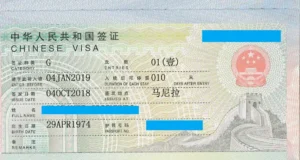
a photo of g or transit visa issued in year 2018 , single entry and have 10 days duration of stay

G VISA (TRANSIT VISA)

The Chinese G visa, also called the Transit Visa, is a special short-term entry permit designed for international travelers

who need to pass through mainland China as a connecting point on their journey to a different final destination.

Read More »
hainan, china view and some tall buildings

HAINAN’S 30-DAY VISA-FREE POLICY FOR FILIPINOS

Filipino passport holders may stay in Hainan for up to 30 days without a visa.

The policy, announced in February 2024, is valid until December 31, 2026.

Travel is allowed for tourism, business visits, family trips, conferences, sports events, or medical purposes.

Read More »
A man holding a Chinese visa successfully stood in China after passing through immigration and customs checks.

SCENARIOS ENCOUNTERED BY SOLO TRAVELLERS IN IMMIGRATION

Solo travelers often face a different level of scrutiny at immigration compared to families or groups.

Officers are trained to look for signs of human trafficking, illegal work intent, or vague travel plans

which can sometimes be misinterpreted when a traveler is alone.

Read More »
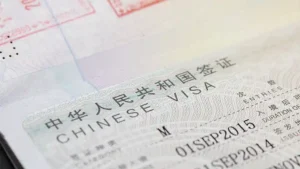
m chinese visa or considered as business visa that is release in year 2014

M VISA (BUSINESS VISA)

The M Visa (often called the “Business Visa”) is designed for professionals and entrepreneurs.

Those who need to visit mainland China for commercial and trade-related activities.

Essentially, if you are traveling to China to conduct business but won’t be “employed” by a Chinese company or

Receive a local salary; this is likely the visa you need.

Read More »
Scroll to Top

To reset your password, please enter your email address or username below.

Announcement

          The online visa application management system on the account terminal is currently undergoing updates. Business is temporarily being conducted offline. We will reopen the online application system once the system is updated and complete.

          We sincerely apologize for any inconvenience caused.

Published: March 29, 2026