1.)FAMILY
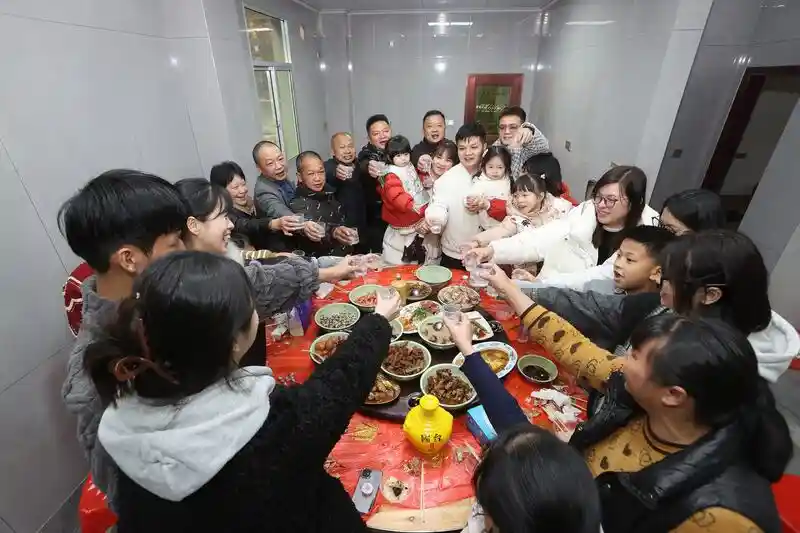
In the Chinese mindset, “Family comes first” is not merely a slogan, but a survival philosophy akin to a belief. Fundamentally, the family is seen as the smallest complete unit of society and the only bulwark against external storms. Consequently, this concept dictates that Chinese people often do not exist as atomized individuals, but rather strive as links in the family chain. In this context, the so-called “multi-generational support” here is not a one-way obligation to care for the elderly, but a “relay race” spanning time. Metaphorically speaking, like the relationship between a tree and its roots, the older generation often devotes all their efforts to “lifting” the next generation, whether it’s investing their life savings in a house or sacrificing their retirement to help raise grandchildren. Ultimately, this almost instinctive dedication aims to secure a higher social starting point for the family.
Furthermore, this support system constructs a unique family contract: each generation “carries on the torch.” As a result, young people grow up under this selfless support, naturally learning the responsibility to reciprocate—not only material support but also spiritual “support in old age.” Thus, the Chinese family concept rarely emphasizes absolute “individual freedom,” but rather seeks a balance between responsibility and obligation. In essence, a thriving family is essentially a symbiotic entity where all members “think in the same direction and work together towards the same goal.” Here, the wisdom of elders and the vitality of younger generations converge. Through this close intergenerational mutual assistance, the originally fragile individual’s life is extended into an ever-growing family force.
In contemporary China, even when the younger generation forms nuclear families, physical separation does not equate to emotional estrangement. On the contrary, this state of “separation without separation” has become a new normal. Specifically, digital technology has become a bond maintaining intergenerational intimacy; in this context, periodic video calls are not merely simple greetings, but a ritual of “digital companionship.” As a result, this high-frequency interaction effectively dissolves the sense of alienation caused by geographical distance, allowing parents to remain deeply involved in their children’s lives and, simultaneously, enabling children to constantly feel the warmth of their family of origin.
Furthermore, the so-called “two-way flow of financial support” profoundly reveals the unique reciprocal mechanism within Chinese families. Essentially, this is no longer the traditional one-way “raising children to provide for old age,” but a dynamic balance based on love. For instance, parents often provide strong support—six wallets(grandparents and both parents)—at key life junctures such as homeownership and childcare; conversely, in return, children provide financial and medical support to their parents in their old age. Ultimately, this two-way flow of funds and emotions constructs a highly resilient family economic community, ensuring that each member has a strong family backing them up when facing life’s risks.
2.)FILIAL PIETY CULTURE
- Respect and caring for elders is a moral duty:
Filial piety, as the moral cornerstone of traditional Chinese culture, encompasses far more than simple material support; fundamentally, it constructs a complete ethical system from behavior to spirit. Confucius once said, “Nowadays, filial piety is considered merely providing for one’s parents. But even dogs and horses are provided for; without respect, what distinguishes us?” This profoundly reveals that the core of filial piety lies in “respect.” Specifically, true filial piety requires children to not only ensure their parents’ basic needs are met, but also to provide them with heartfelt respect and emotional comfort—that is, “nurturing their will” and “nurturing their appearance.” This spiritual level of respect requires children to understand their parents’ aspirations, uphold their dignity, and ensure that their parents not only live comfortably in their later years but also experience spiritual joy. Consequently, filial piety is not only about fulfilling the obligation of supporting one’s parents, but also a moral consciousness based on blood ties and affection, a spiritual force that maintains family harmony and intergenerational emotional bonds.
Furthermore, the value of filial piety does not stop at the “small filial piety” within the family, but is elevated to a broader social responsibility and national sentiment through the logic of “respecting the elderly as one would one’s own parents.” In essence, this extension, from close relatives to distant ones, expands filial piety towards one’s own elders to respect and care for all elders in society, thus building a warm and caring social community. In the context of modern society, this cultural gene has transformed into a unique advantage in addressing the challenges of an aging population. It is not only reflected in the meticulous care family members provide for the elderly, but also in the societal efforts to build a friendly society that values filial piety and respect for the elderly through improving the pension system, developing community mutual aid services, and utilizing technology to bridge the digital divide. Ultimately, filial piety has evolved from traditional family ethics into a moral bond connecting individuals, families, and society, becoming an important symbol of the wisdom and warmth of Chinese civilization.
3.)HARMONY
- Avoiding conflict, maintaining group cohesion:
In Chinese philosophy, “avoiding conflict” is far from a cowardly escape; rather, it’s a sophisticated survival strategy employed to maintain collective cohesion. Fundamentally, this thinking is deeply influenced by Confucianism’s emphasis on harmony, viewing harmonious interpersonal relationships as a shared resource requiring mutual maintenance. Consequently, in group life, Chinese people often resolve differences through non-confrontational methods such as “saving face,” subtle expression, or seeking mediation. At its core, the logic behind this approach is that open conflict often damages the emotional bonds of the group, leading to a loss of “harmony among people.” As the ancient wisdom goes, “favorable timing is not as important as favorable location, and favorable location is not as important as harmonious relationships.” In other words, once internal unity and cooperation are lost, any collective strength will disintegrate. Therefore, individuals often moderately restrain their personal emotions or interests for the sake of overall stability; in this light, this “considering the big picture” is seen as a sign of mature moral character.
On the other hand, this pursuit of harmony is not unprincipled “muddying the waters,” but rather a pursuit of a higher level of “harmony in diversity.” Essentially, true Chinese harmony seeks consensus while acknowledging differences; it allows for different voices while maintaining group cohesion, provided these voices do not tear apart collective unity. From this perspective, in a collectivist context, conflict is viewed as a costly endeavor, while cooperation and symbiosis are seen as the only sustainable solutions. Driven by this, this cultural gene leads Chinese people to tend to “turn swords into plowshares” when dealing with conflicts, finding a “greatest common denominator” acceptable to all parties through negotiation and compromise. Ultimately, this effort to avoid conflict actually constructs a highly resilient social safety net, enabling groups to quickly unite and demonstrate strong cohesion and survival capabilities when facing external challenges.
4.)DILIGENCE
- Hard work is a virtue; perseverance is admired
In the Chinese spiritual landscape, “diligence” is far more than just a means of making a living; it is imbued with immense moral weight and regarded as a fundamental virtue for survival. Specifically, the ancient saying, “The livelihood of the people depends on diligence; diligence ensures abundance,” transcends the simple realm of labor, internalizing into a firm belief in “heaven rewards diligence.” From this perspective, in Chinese culture, diligence is not only proof of personal ability but also a weapon against the vicissitudes of fate. For instance, whether it’s the ancient practice of studying diligently by hanging oneself from the rafters or the modern struggle under the “996” work schedule, the Chinese believe that only through daily hard work can one accumulate the capital to change one’s destiny. Consequently, this cultural gene, which regards “diligence” as a virtue, has led Chinese society to universally value down-to-earth work and view laziness as shameful, thus forming a collective subconscious that reveres labor and honors struggle throughout society.
Furthermore, “perseverance,” on the other hand, is a more advanced form of diligence, representing the tenacity of “holding fast to one’s goals” in the face of adversity. Historically, the Chinese have a unique dialectical understanding of “suffering”—”Only by enduring the bitterest of hardships can one rise above others.” In fact, this veneration of perseverance stems from the historical pressures of a large population and limited land, forcing people to demonstrate extraordinary endurance and resilience in the face of natural disasters and man-made calamities. This is evident in everything from the myth of “The Foolish Old Man Who Moved Mountains” to the pursuit of precision by modern master craftsmen; this spirit transcends mere physical exhaustion, evolving into a long-term mental philosophy. In essence, it means not being defeated by temporary difficulties, nor succumbing to temporary comfort, but rather fulfilling promises to the future with an almost obstinate persistence over the long course of time. Ultimately, this admiration for “perseverance” is, in effect, the highest tribute to the vitality of life itself.
5.)LEARNING
- Education = pathway to success
In the deep-seated logic of Chinese families, education is imbued with an almost religious status. Fundamentally, it is not merely the transmission of knowledge, but the only reliable channel to change one’s destiny and achieve upward social mobility. Driven by this consensus that “education equals the path to success,” families exhibit an extremely high level of academic focus on children from early childhood. In practice, parents often act as “education brokers,” investing heavily not only financially and paying exorbitant tutoring fees, but also deeply intervening in their children’s lives, accompanying them in their studies and planning their academic paths to ensure they don’t fall behind from the start. Ultimately, this intense investment stems from a profound collective memory and survival wisdom—in fierce social competition, only the cultural capital accumulated through education can build a solid moat against risks for the next generation, thereby securing a stable life and social respect.
On a deeper level, however, this dedication to education goes beyond utilitarian entrance exams; it is internalized as a pursuit of “lifelong learning.” Chinese parents understand that academic qualifications are merely an entry ticket; in contrast, continuous improvement is the foundation for success. Accordingly, they encourage children not only to master a particular skill, but also to possess the resilience to reflect and grow in adversity. Essentially, this concept views learning as a lifelong practice, rather than a phased task. Whether for coping with workplace challenges or for improving personal qualities, learning is seen as an asset that can continuously appreciate in value. Consequently, in this cultural atmosphere, education is no longer simply drudgery, but a noble responsibility to repay family and contribute to society through continuous self-improvement. In the final analysis, this intergenerational thirst for and transmission of knowledge constitutes the enduring inner driving force of Chinese society.