





Home > Posts > CONSULATE AND EMBASSY KEY DIFFERENCES ,FUNCTIONS AND ROLES

CONSULATE AND EMBASSY KEY
DIFFERENCES, FUNCTIONS, AND ROLES

Although both represent a country’s interests in another country, they differ fundamentally in their legal status,

core functions, jurisdiction, and crisis management authority.

Simply put:

Embassies are responsible for political dialogue between “states,”

while Consulates are responsible for specific services between “people.”

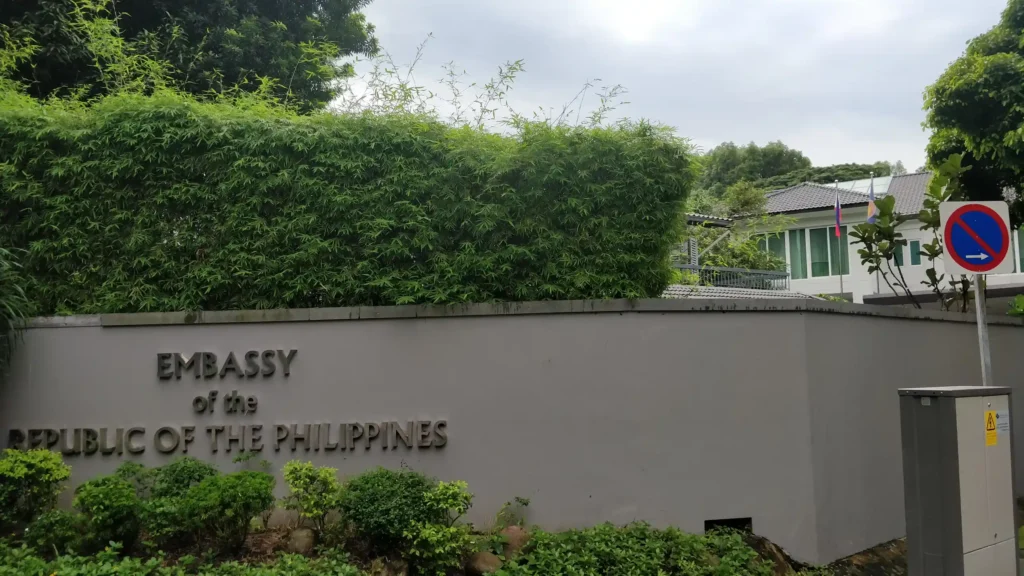
The exterior of the Philippine Embassy ​​and the Philippine Consulate.

Table of Contents

number-1

LOCATION & PRESENCE

1.  Embassy

  • Location: Unique and fixed. Located in the capital city of the host country.
    • Example: The U.S. Embassy in China is only in Beijing; the Chinese Embassy in the U.S. is only in Washington, D.C.
  • Symbolic Significance: It is the highest representative office of the sending country in the host country, usually located in the diplomatic ward, and enjoys the highest diplomatic immunity.
  • Quantity Limit: A country can only have one embassy in another country.

2. Consulate / Consulate General 

  • Location: Flexible and dispersed. Located in major cities (not capitals) of the host country, typically economic centers, transportation hubs, or areas with large overseas communities.
    • Example: In addition to its embassy in Beijing, the United States also has consulates general in Shanghai, Guangzhou, Chengdu (now closed), Shenyang, and Wuhan.
  • Strategic Purpose: To facilitate business for local residents without requiring them to travel long distances to the capital.
  • Quantity: Multiple can be established depending on needs. Those in large cities are called Consulate General, while those in smaller cities may simply be Consulates or Honorary Consulates.
number-2

LEADERSHIP & RANK

1. Embassy: The Ambassador

  • Title: Ambassador Extraordinary and Plenipotentiary.
  • Appointment: Appointed personally by the head of state of the sending country (e.g., president, chairman, king), and with the consent of the head of state of the host country (presentation of credentials).
  • Status: The ambassador is the personal representative of the head of state of the sending country in the host country. In diplomatic protocol, the ambassador’s status is higher than all consular officials.
  • Responsibilities: Reports directly to the Ministry of Foreign Affairs of the sending country, responsible for the highest level of political communication.

2. Consulate: The Consul General

  • Title: Consul General or Consul.
  • Appointment: Usually appointed by the Ministry of Foreign Affairs or the administrative department of the sending state, without requiring confirmation at the level of the head of state of the host country (but a consular mandate is required).
  • Status: Part of the diplomatic team, but administratively subordinate to the ambassador. The Consul General is required to regularly report to the ambassador on the situation within their jurisdiction.
  • Responsibilities: Focused on specific administrative affairs and citizen services, not involved in high-level political negotiations.
number-3

FUNCTIONS & RESPONSIBILITIES

This is where the biggest difference lies. It’s divided into “political level” and “service level“.

Embassy Functions
(Embassy: Macro-political and Overall Coordination)

1. Political Diplomacy:

  • Represents the sending government in high-level negotiations with the host government (e.g., trade agreements, territorial disputes, international treaties).
  • Monitors the political situation in the host country and provides intelligence and policy advice to the sending government.

2. Overall Coordination:

  • Coordinates the work of all sending government agencies in the host country (including consulates, military missions, and commercial offices).
  • Final Decision-Making Authority: When a consulate encounters major problems it cannot resolve (e.g., large-scale evacuation of citizens, handling major criminal cases), the embassy must intervene.

3. Cultural & Public Diplomacy:

  • Organizing national celebrations (e.g., National Day receptions) to promote the national image.

4. Visa & Passport:

  • Although also processed, it usually handles special visa categories (e.g., diplomatic visas, official visas) or complex cases that consulates cannot handle.

5. Scope of Jurisdiction:

  • Nationwide: An embassy has diplomatic jurisdiction over the entire territory of the host country. If there is no consulate in a region, all affairs in that region are handled directly by the embassy.

Consulate Functions
(Consulate: Micro-services and Citizen Protection)

1. Citizen Services – This is the core

  • Passport Services: Passport renewal and replacement, travel document processing.
  • Notarization and Authentication: Marriage registration, birth registration, document notarization (e.g., powers of attorney, declarations).
  • Voter Registration: Assisting overseas citizens with registering to vote in domestic elections.

2. Visa Issuance:

  • Processing the vast majority of ordinary visa applications (tourism, business, study, work). This is the busiest service at the consulate.

3. Emergency Assistance:

  • Arrest/Detention: When a citizen is arrested within the consulate’s jurisdiction, consular officers have the right to conduct consular visits to ensure fair treatment (in accordance with the Vienna Convention on Consular Relations).
  • Medical/Death: Assisting seriously ill citizens to return home, or handling the aftermath of a citizen’s death abroad (notifying family members, assisting with the repatriation of remains).
  • Disaster Response: Organizing the evacuation and resettlement of citizens within the consulate’s jurisdiction during earthquakes, wars, and unrest.

4. Trade & Business Promotion:

  • Assisting domestic companies in conducting business within the local jurisdiction and resolving specific commercial disputes (non-political).

5. Scope of Jurisdiction:

  • Regional/District: Each consulate has a clearly defined consular district.
  • Example: The consular district of the U.S. Consulate General in Shanghai typically includes Shanghai, Zhejiang, Jiangsu, and Anhui. If you live in Anhui, you must apply for a visa at the Shanghai consulate, not the embassy in Beijing (unless there are special circumstances).
  • Out-of-District Invalidity: Generally, consulates cannot process applications outside their consular district (for example, someone living in Beijing cannot apply for a passport at the Guangzhou consulate; their application will be refused).
number-4

CRITICAL SCENARIO: Diplomatic Breakdown

          When relations between two countries deteriorate, even to the point of severing diplomatic ties:

1. Embassy:

  • Immediate closure. Upon the severance of ties, the ambassador and all diplomats must evacuate within a specified timeframe. Consequently, formal diplomatic communication channels between the two countries cease.

2. Consulate:

  • Not necessarily closed. According to established international practice, even in the event of a severance of diplomatic relations, consular functions may nevertheless be temporarily retained or entrusted to a third country (protectorate) for the specific purpose of protecting the interests of stranded citizens.
    • Real-world example: In certain tense situations, an embassy may be downgraded to an “interests post,” in which case consular services (such as passport issuance and emergency assistance) may continue through other arrangements until the last minute. Nevertheless, as a general rule, a severance of diplomatic relations means all official institutions cease operations, thereby making consular protection extremely difficult.
number-5

EXPERT TIPS & MISCONCEPTIONS

1. Myth: “Embassies have more power than consulates, so getting a visa at the embassy is faster.”

  • Truth: Actually, this is totally wrong! In reality, embassies typically do not handle ordinary tourist or business visa applications. Consequently, if you insist on going to the embassy, you will likely be directed back to the corresponding consulate or asked to mail your application. Simply put, going to the wrong place only wastes your time.

2. Important Concept: Honorary Consul

  • In cases where there are small cities without formal consulates, the dispatching authority often appoints prominent local figures—typically businesspeople or lawyers—to serve as “honorary consuls.”
  • Limitations of Authority: Honorary consuls cannot issue visas or passports. Instead, they can only provide limited assistance—such as emergency contact and simple consultations—and refer cases to the nearest consulate general. Therefore, you should not expect an honorary consulate to handle everything.

3. “Protectorate State” Mechanism in Emergency Situations:

  • When country A and country B have severed diplomatic relations, country A will, consequently, usually entrust the embassy of country C—which serves as a neutral third party—to safeguard its interests in country B.
  • Example: Prior to the establishment of diplomatic relations between China and the United States in 1979, US interests in China were managed by the Polish Embassy; similarly, when Iran had no embassy in the US, its interests were managed by the Pakistani Embassy. In such cases, you need to seek assistance from the embassy of the country managing the interests.

4. Appointment System:

  • Whether it’s an embassy or a consulate, modern diplomatic institutions almost universally operate on an appointment-only basis. Consequently, walk-ins are usually refused entry unless it’s an extremely urgent, life-threatening situation.

"For most of the travelers, in 99% of cases, you will be dealing with a "consulate"
(or its visa application center), not an "embassy"."


          An embassy is the brain. Located in the capital, it is led by an ambassador and is responsible for political, strategic, and overall coordination between countries.

          A consulate is the hands and feet. Located in major cities, it is led by a consul general and is responsible for specific visas, passports, citizen protection, and business services.

          Understanding this will save you a lot of trouble when handling business.

You may also like

The exterior of the Philippine Embassy ​​and the Philippine Consulate.

CONSULATE AND EMBASSY KEY DIFFERENCES ,FUNCTIONS AND ROLES

Although both represent a country’s interests in another country, they differ fundamentally in their legal status, core functions, jurisdiction, and crisis management authority.

Simply put: embassies are responsible for political dialogue between “states,” while consulates are responsible for specific services between “people.”

Read More »
crew member inside the plane, who has a C visa, stewards entertaining the plane passengers.

C VISA (CREW VISA)

The C Visa (Crew Visa) is a specialized Chinese visa category issued exclusively to foreign crew members

engaged in international transportation duties.

Unlike tourist or student visas, the C visa is designed for professionals whose work

involves cross-border travel by air, sea, rail, or road

Read More »
Foreigner's visitng one of the famous tourist spot in china

CHINA TRAVEL TIPS FOR FOREIGNERS

If you’re visiting or staying in China as a foreign national, your trip will run much smoother if you focus on three essentials:

digital preparation, legal compliance, and cultural etiquette.

As of early 2026, China has significantly expanded its visa-free entry program, making travel easier for citizens of many countries.

Read More »
view of Macau City in the night with some beautiful lightnings and also tall buildings

MACAU ENTRY REQUIREMENTS 2026

Macau manages its own immigration system, separate from mainland China and Hong Kong.

To apply, follow the official steps from Macau’s Public Security Police (PSP) and government website.

Read More »
A Chinese visa application paper gets rejected, they need advices

VISA REJECTION: CAUSES, CONSEQUENCES, AND STRATEGIC PREVENTION

Many applicants have their visas refused, not because they are “unqualified,” but because of missing documents, contradictory information, or providing false materials.

This pressure is real, but excessive anxiety (overthinking) often leads applicants to prepare incorrect documents or even perform poorly in the interview due to nervousness.

The core logic of visa officers (VOs) is simple: “presumption of guilt.”

That is, they assume you have an intention to immigrate unless you can provide irrefutable evidence that you will return to your home country on time.

Below are six core reasons for visa refusal and an in-depth analysis:

Read More »
A man holding a Chinese visa successfully stood in China after passing through immigration and customs checks.

SCENARIOS ENCOUNTERED BY SOLO TRAVELLERS IN IMMIGRATION

Solo travelers often face a different level of scrutiny at immigration compared to families or groups.

Officers are trained to look for signs of human trafficking, illegal work intent, or vague travel plans

which can sometimes be misinterpreted when a traveler is alone.

Read More »
Scroll to Top

To reset your password, please enter your email address or username below.

Announcement

          The online visa application management system on the account terminal is currently undergoing updates. Business is temporarily being conducted offline. We will reopen the online application system once the system is updated and complete.

          We sincerely apologize for any inconvenience caused.

Published: March 29, 2026