It's a "navigation map," not a "script."
Many travelers don’t know how to create an itinerary that is both logical and flexible. Therefore, remember: an itinerary is your guide, not a rigid script.
- The Art of Leaving Room for Unexpected Moments: The best trips often happen in unexpected moments. Reserve “magic moments” in your itinerary, allowing room for local recommendations, unexpected discoveries, and moments of relaxation.
- Dual purpose:
1. Internal: Helps you organize your thoughts and maximize your time.
2. External (crucial): It serves as a “letter of confidence” for immigration officers. A professional itinerary directly proves you are a genuine tourist with no intention of working illegally or overstaying your visa.
The 5-Step DIY Framework
If you plan to do it yourself (DIY), please follow these professional steps:
1. Brainstorming & Unorganized List:
Don’t worry about the dates right away. Instead, first, list all the places you want to go: the Great Wall, the Bund, the Giant Panda Breeding Research Base, the Terracotta Army in Xi’an, etc. In addition, include the experiences you want to do: eat hot pot, watch Peking Opera, ride the high-speed rail, and visit night markets.
2. Content Enrichment:
Your list shouldn’t just contain attraction names; it must include multi-dimensional content to make the trip seem authentic and fulfilling:
- Attractions: Must-see landmarks.
- Local Experiences: Such as “participating in morning exercise,” “learning to make dumplings,” or “strolling through a morning market.”
- Food Spots: Specific long-established restaurants or unique food streets.
- Hidden Gems: Less-traveled locations that aren’t tourist traps, demonstrating that you’ve done your research.
3. Seasonal Factors Check:
China is vast, with significant climate variations. The following must be checked:
- Weather: Harbin’s winter vs. Hainan’s summer.
- Holidays: Avoid or specifically plan your visit during the Spring Festival (traffic is extremely difficult during the Spring Festival travel rush) and Golden Week (crowded).
- Closing Hours: Many museums in China (such as the Palace Museum and the National Museum of China) are closed on Mondays; be sure to avoid these times.
- Special Events: Such as the Water Splashing Festival and the Naadam Festival.
4. Map Visualization:
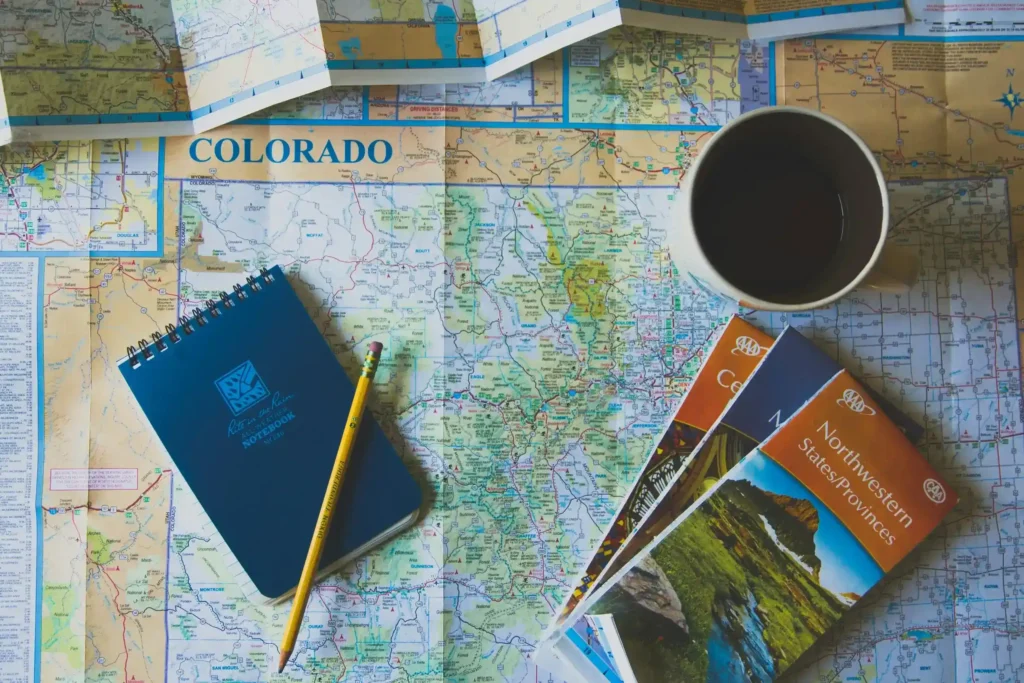
Use Google Maps or Amap/Baidu Maps (offline packages need to be downloaded in advance).
- Mark Locations: Mark all the places you want to visit on the map.
- Logical Connections: Observe the distances and arrange adjacent attractions on the same day to avoid “running around.” For example, go to the Forbidden City in the morning, Jingshan Park in the afternoon, and Wangfujing in the evening; this is geographically convenient.
5. Template & Formatting:
Organize messy information into clear tables. Immigration officers typically only have a few seconds to scan your documents; clarity directly impacts your approval rate.
Required columns:
Date | City | Morning Activities | Lunch Location | Afternoon Activities | Dinner/Accommodation | Transportation | Booking Confirmation Number
Key Logistics Booking
To make your itinerary convincing, you must secure key logistics in advance. Words alone are insufficient; a booking confirmation slip is the soul of your itinerary.
1. Flights & Accommodation:
- This is the most basic requirement. Round-trip airfare (proof you will return home) and hotel bookings for the entire trip (proof you have accommodation) are required.
- Note: The name on the hotel booking must match the name on your passport.
2. Inter-city Transport:
China’s high-speed rail network is highly developed. Therefore, for intercity travel (e.g., Beijing to Shanghai), booking high-speed rail tickets in advance and printing the confirmation greatly increases credibility. Similarly, for car rentals or charters, it is essential to keep the booking receipt.
3. Tours & Restaurants:
- Must be booked in advance: In China, many popular attractions (such as the Forbidden City, Terracotta Army, and Potala Palace) require real-name, time-slot reservations; tickets cannot be purchased on-site.
- Please indicate on your itinerary: “Forbidden City tickets booked, time slot 09:00-11:00, order number XXXXX”. This will make immigration officers believe you are a genuinely well-prepared tourist.
4. Travel Insurance:
Although entry into China is not subject to mandatory checks, this is still a standard requirement for international travel and a testament to your financial stability.
Quick Itinerary Checklist
The Itinerary is the Immigration Bureau's "Secret Code"
For travelers from the Philippines or other countries traveling to China, the core concerns of Bureau of Immigration (BI) officers are typically:
“Are you going there to work illegally?”
“Are you going there to engage in gray-market activities?”
How can a perfect itinerary eliminate any doubts?
- Demonstrating spending power: Detailed hotel and ticket bookings show you have enough money to spend and don’t need to work.
- Demonstrating a tight schedule: If your itinerary is full of sightseeing activities, it means you simply don’t have time for “illegal work.”
- Demonstrating authenticity: Specific restaurant names and train schedules—only genuine tourists research this in such detail. Scammers usually only have a vague flight and hotel booking confirmation.
So, the strategy is simple:
When the immigration officer asks, “What are you going to China for?”
Answer, “Tourism.” Immediately hand over this printed itinerary with color markings and the accompanying booking confirmation.
Confidently say, “This is my detailed plan for the next 7 days. I’ve already booked all the hotels and tickets.”
Effect: This usually ends any further questioning and allows you to pass through immigration smoothly.
But don’t go to the other extreme—lock every minute in.
Just remember: They’re just doing their job. If all your supporting materials reinforce the legitimacy of your actions, then they have no reason to deliberately make things difficult for a stranger.
They will only hesitate if they have a specific reason, such as:
- After asking several questions, they still haven’t cleared up their doubts.
- They find it difficult to convince themselves to let you through based on the information provided.
The best itinerary is:
- Solid Framework: Major transportation, accommodation, and core entrance fees are all secured, leaving no room for error and sufficient to handle immigration.
- Flexibility: Leave 2-3 hours each day for getting lost, for unexpectedly finding a bowl of noodles at a roadside stall, and for chatting with locals.
- Action Suggestion: Start creating your itinerary now! Consider it the first cornerstone of your Chinese adventure.
Remember, a clear plan = confident travel = smooth passage through customs.